Many of us know that volunteering and participating in local community life is good for us. It gives us a sense of purpose and connectivity to the area that we live in, can increase our well-being, increase confidence, improve our skills and can even buffer us from depression.

No one can deny that this year has been hard, full of challenges, worries and changes. However, throughout it we have seen communities, neighbourhoods and the voluntary sector as a whole pull together, giving their time and resources to help and support others. We have seen individuals who would not normally volunteer step up and offer to help with prescription collections, food deliveries and check-in calls. We have witnessed changes to the way existing, often long-standing, volunteers have had to pause their volunteering or take up new roles as services have changed and adapted to the time.

Volunteering is at the core of creating connected, sustainable communities, but what if individuals chose their volunteering roles with as much care as their working roles?  What if volunteering roles were viewed as being part of a community we can choose to join and engage with?

Many people volunteer to alleviate their own loneliness, citing that the increase in social connections and activity found in volunteering helps them feel less lonely, however brief or small that contribution might be. Rather than just a brief social contact, it gives them a sense of belonging to the wider community in which they live, and a feeling of achievement in impacting local issues and concerns.

Another group of volunteers may recognise, through their own experience, that loneliness and social isolation can be overwhelming and demoralising for an individual. They take their own experiences of loneliness and turn them into an opportunity to affect the lives of others through social connectivity and interaction.

Whatever the reason for volunteering in the first place, there is no doubt that volunteering is an ideal opportunity for breaking out of isolation and restoring meaning in our lives. Volunteering for something that has meaning to the individual, motivates and inspires action.

However, most importantly, volunteering within local contexts and organisations, and even your local street can create connections and networks which last many years; enabling local communities to thrive, grow and flourish.  So why not #DonateLocal and give some of your time to volunteering in your local community?

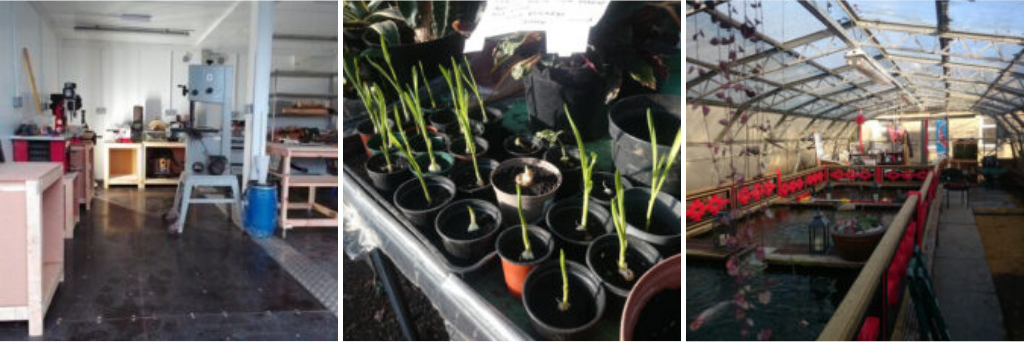
After over twenty years the doors of St Michael’s Church Bracken Bank Keighley are going to open again to serve the local community.  The first stage will be to utilise four of the rooms plus a small kitchen area for a men’s shed project.

The project is being developed by the Lion’s Den Shed CIO, which already runs the Shed in the grounds of Cliffe Castle where the activities revolve around woodwork, horticulture and Khoya Carp breeding. The Lion’s Den Shed is being supported in developing the new shed by the Parish of St John the Evangelist, Ingrow, within which St Michael’s is located as well as Community First Yorkshire’s Men’s Sheds Development Officer.

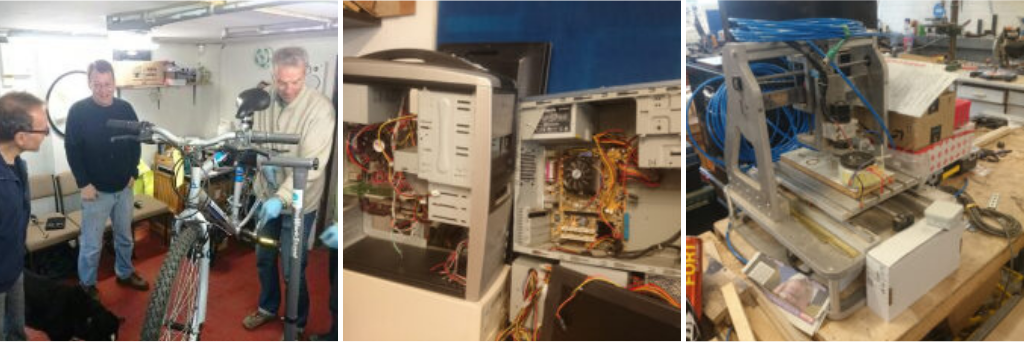
Initial ideas for activities at the Bracken Bank Shed include: bicycle maintenance, electronics and innovation and of course drinking lots of tea and coffee.

Over the next few weeks volunteers from the Lion’s Den Shed will be refurbishing the space; installing new windows, doors, boiler and decorating and equipping a bike maintenance workshop, and innovation technology centre.

If you would like to find out more or how to being involved  contact:

Allan Clark

Phone: 07903 044060

Email: nalla105c@yahoo.co.uk

There are so many additional reasons why people are struggling this year, and so much extra support needed. Covid-19 has meant thousands have lost their jobs and thrown millions into lower incomes. Many people are struggling to put food on the table for their children, and having a young daughter myself, this really struck a cord.

Working for Community First Yorkshire, I see so many ways in which our projects, and other charities, help people in financial hardship. I wanted to try to make a difference on a more personal level and help those who have struggled financially.

The work of professional footballer, Marcus Rashford, to stop children going hungry during the school holidays really made me think about how I could help over the Christmas break, and in particular, on Christmas day. I’d heard a story on social media about someone who’d asked their local primary school if there was a particular family who were struggling and created a Christmas hamper for them, with food for Christmas dinner, selection boxes, advent calendars, and some gifts for their two children.

I decided that I’d like to take this idea and make it work in the village I live in. I organised a food bank donation weekend in December 2020, I checked with our local food bank what items they were looking for (and any they weren’t – they already had lots of mince pies!), I then publicised it on our local Facebook village group. The local primary school kindly agreed to have a day of donations and villagers showed their support by having donation boxes outside their homes over the weekend for people to drop their food items off. It was a great way to give back to our local community, in a socially distanced way. We supported York Food bank who support people in crisis.

It was wonderful to see how generous and kind hearted so many of the people in my community are, and I enjoyed speaking to people and hearing their stories (from the end of the drive) when they dropped off their donations. I was overwhelmed with how much people had donated, we received a fantastic amount of Christmas food and gifts. Give it a try in your village – if you’re having a Christmas lights trail, why not incorporate food donation boxes for people when they are walking round?

There are so many other ways you could consider giving to charity this year, in a socially distanced world – instead of the usual office Secret Santa, you could donate to a local charity instead, and then help even more by spreading the word about them and what they do to your colleagues. Or how about organising a Christmas quiz at your works Christmas Zoom meeting in place of the usual Christmas party? Half of the proceeds to the winner, half to a local charity.

Sue Oliver, schemes manager at MHA Communities Harrogate has donated her usual secret santa gift this year and said: “Normally at this time of year, my colleagues and I would be spending an agreed amount on a ‘Secret Santa’ gift. As we are not meeting up this Christmas, I have donated my ‘gift’ to the new MHA Communities Harrogate JustGiving page.

“The new Methodist Homes MHA scheme in #Harrogate will help prevent loneliness and isolation among older people in the local community, who continue to live independently in their own homes, through telephone and video befriending and digital activities. The aim is to enable people to stay connected in their communities so that they can #livelaterlifewell.

“Please join me in donating the value of your usual workplace ‘Secret Santa’ gifts or a round of drinks at the office party!”

I’m not great at sending Christmas cards, and I normally make a donation to charity instead, but those few that I do send, I buy them from a local charity. This year, because we haven’t been able to see our friends and family as much as normal, I will be trying to send out cards with notes in them to tell everyone how much I’m missing them, but I will be supporting a local charity by buying them from their shop.

If you’re running low on Christmas decorations this year (maybe you also have a small child or pet who just can’t help themselves from touching and breaking baubles!), many charities also sell Christmas decorations, you could brighten up your home and support a local charity close to your heart at the same time.

Each year around this time I choose 12 charities to donate to each month for the next year, this isn’t often the way charities might prefer people to donate to them, I know many prefer a regular donation, however it means that I research and get to know about 12 new local charities and as well as my small donation, I can support them by being a champion for their work, telling others about them and sharing their social media posts. This year all of my 12 charities are going to be local and I’m really looking forward to hearing about lots of local charities through our #DonateLocal campaign to make my choices for 2021, I’m open to suggestions if anyone would like to get in touch via our social media pages.

Donate Toys
The Reuse Santa Appeal by Yorwaste Ltd is co-ordinated in partnership with City of York Council and North Yorkshire County Council – York or North Yorkshire Household Waste Recycling Centre.

The Batley Sporting Charitable Trust and Batley Bulldogs have teamed up on a toy appeal, to provide disadvantaged children with toys this Christmas. They are looking for donations of new toys for children of Primary school age, such as puzzles, games, sports equipment, things to get creative such as colouring, painting or making or toys that both boys and girls will play with. They will also be taking donations via their Go Fund Me page to buy toys.

The Banana Box Project in Selby is asking for donations of good quality (can be pre-loved) toys, games and books to make toys available to the ‘3 children out of 10’ in Selby who may be living in poverty.

The Hartlepool Giving Tree has been so popular this year that they have expanded their area and are donating to people and charities all over the UK. This is an amazing project which creates a Christmas tag for a child, asking for a specific item for Christmas, you can then choose which child you buy for and send them their gift. Many of these children are fleeing domestic violence and have had to leave everything, all of their toys behind.

Donate gift cards or household objects
IDAS Christmas appeal are asking for bedding sets, crockery, towels, cheap mobile phones for those fleeing domestic violence.

For more ideas on ways you can spread some Christmas cheer this year, take a look at this blog by one of our development officers, Lizzie – It’ll be Covid this Christmas.

If you have any other thoughts or ideas we’d love to hear from you so we can share these with others. We’d love to hear how you are supporting people in your community. Please tag us on Facebook @Comm1stYorks

 

Christmas this year is going to be a little different. Covid restrictions mean many events and activities are unable to take place and opportunities for people to get together will be limited. Perhaps now more than ever we might need to think about supporting each other just a little more.

As part of our #DonateLocal campaign we’ve been thinking of ways people can spread Christmas cheer.   If you have any other thoughts or ideas we’d love to hear from you so we can share these with others.

Donate Time:

  • Christmas cards – Make, or buy these from local shops and deliver these locally. You may like to include your number with a message to let someone know they can get in touch if they need help with anything or just a chat.
  • Write to care home residents – Contact your local care home and see if they would welcome Christmas cards and letters. Some local shops are offering post collection boxes for exchange of post.
  • Telephone befriending – Across North Yorkshire there are a network of mutual aid and 23 Community Support Organisations (CSOs) helping those in need in our communities. Many of the CSOs are seeking people who could telephone others and offer a lifeline of friendship. You can find out further details of the CSO for your area here. The NHS and Royal Voluntary Service’s ‘Christmas Together initiative also aims to support people living alone or shielding by connecting them with a friendly voice who can phone them for a chat. You can also still sign up to be a Community Response Volunteer with the NHS, collecting and delivering shopping and other essentials, such as medication, to vulnerable people, by car or by foot.
  • Volunteering For life – not just for Christmas – search for volunteering roles on the NCVO (the National Council for Volunteering Organisation) website. There are links to multiple volunteering websites from organisations such as Vinspired, and Volunteering Matters.
  • Social media – support a charity by following and sharing its social media comments.
  • The Great Winter Get Together, organised by the Jo Cox Foundation, runs from 14 December to 18 January, and encourages people to help out by joining virtual events, supporting a neighbour, or reaching out to an old friend

Volunteering your time isn’t the only option.

Donate Goods or Money:

  • Christmas fundraise for a local charity – There are lots of ways you can help from donating things you no longer need to offering neighbourhood services such as a gift wrapping or Christmas tree/recycling collections for a donation. You will need to arrange drop off/collection points to avoid contact.  What about a sponsored swim or walk, decorating the outside of your house and asking for donations for a charity?  With things being a little different this Christmas, lots of charities are asking people to get involved in festive fundraising digitally this year. Dress Up as an Elf – Alzheimers Society, go through Yorkshire Air Ambulance Advent calendar are just some of the options.  If you care about a cause, have a look on their website or social media and see how you can help.
  • Donate to your local food bank – Food banks provide an essential lifeline for families all year round, but especially at Christmas and especially in 2020. There are a number of food banks across North Yorkshire who, due to increasing demand, are seeking donations. You can donate items in the boxes/trolleys in local shops and supermarkets or alternatively cash donations are always welcome.  You can find details of current food shortages on group Facebook pages.
  • Donate to your local animal shelter – Why not contact them to see how you can help, from knitting dog blankets they can use or sell, to sponsoring a dog.

Christmas will undoubtedly be different this year, but there are still many ways that we can make it special. Perhaps one thing we’ve all seen this year is the value of kindness to others. The ideas above are just some of the ways that you can give something back to your community, and help as many people as possible have a merry Christmas.

We’d love to hear how you are supporting people in your community. Please tag us on Facebook @Comm1stYorks   
All change at Pavilion café. The time has come to bid farewell to one of Rothwell’s finest members of the community. Paul and Tracey are leaving for pastures new but I couldn’t let them leave without paying tribute to the fine work they have done over the last few years. Paul agreed to have a chat about his time at the café and to tell us what the plans are for its future.

Tell us how you became the owner of the Pavilion café and why you chose this place?

Both my wife, Tracey, and I have been customers at the café for as long as we can remember and after we moved to Rothwell we often jokingly said that one day we’d take the business on and transform it into the park café that the community of Rothwell deserved. When the previous tenant left, we approached the council about the tenancy and were told that there would be a bidding process for interested parties. On the open day, hosted by the council, I can remember there being many people in attendance who were interested, many of whom had much more experience than us. This made us think, at the time, that we really didn’t stand a chance of being successful. When we received the documents to submit our bid, I was somewhat overwhelmed with their scale and complexity. I decided to follow the process through, more as an academic exercise to prove to myself that I could do it, but with little expectation. When we were contacted to say that we were the preferred bidder, we were amazed. This is the point when the panic set in! We had brilliant support from the council to get us up and running, but the first summer was chaotic and extremely stressful. However, bit by bit, we settled in and are now very proud of what we’ve built.

What events have you held at the café for the community? Which one was your favourite?

We’ve loved hosting special events such as Summer and Winter craft fairs and pop-up sales for local artisans. We’ve been able to raise quite a bit of money for charity through these events, with our main charity being Dementia Friendly Rothwell who do fantastic work in our local community. We’re also happy to provide a discount to people supported by the charity. We supported the opening of the Dementia Friendly Garden in the park, which continues to provide a lovely oasis of calm and sensory experiences. We have a great relationship with the local Park Run and support them by storing their equipment, providing space for their admin activities and providing a discount for park runners. One of the things that we’ve enjoyed most is the way that we were able to bring some of the park’s regular dog walkers together to become a group of friends who had previously only ever nodded politely to each other on their daily walks. Without a doubt our favourite annual event is “Breakfast with Santa”, where everyone gets the chance to have a friendly chat with Santa in a relaxed environment that the kids (and parents) really love – we know that we’ve been able to cure quite a few children’s fears of Santa with our very friendly, informal approach – Santa has even been spotted playing tennis!

Which community groups have used the café?

We’ve hosted meetings and events for Rothwell Carnival Committee, Friends of Rothwell Civic Enterprise (FoRCE), Amateur Dramatics of Rothwell (ADoR), Springhead Park Volunteers, fostering groups, heritage exhibitions, parent & toddler groups, craft classes and smaller local community groups who just need a small amount of space for a get together

Tell us about the new owner and what they have planned for Pavilion in the future?

When we made the decision to move on, we were lucky to be approached by Tracey’s brother and sister-in-law, Terry and Zoe Gates, to become the new owners. Terry had worked with us on the refurbishment in 2014 and, it turns out, had always been interested in owning the café. We’re delighted that the Pavilion will be remaining in the family. Terry is a builder and land-scape gardener by trade, so he has the resources and experience to take the Pavilion to the next level in terms of infrastructure, although it’s still too early to be able to discuss any specific plans. I’m sure that Terry will be delighted to provide more detail when the time is right! I know that Terry and Zoe are keen to continue the family and community focus that we’ve established. It’s been a difficult year for all small businesses and the Pavilion will need the continued support of the community to ensure that it can get through the current turmoil and be there for everyone when life gets back to normal.

You are moving out of the area, what will you miss most Rothwell and why?

We love the sense of community in Rothwell and have enjoyed being a part of that, both personally and from a business perspective. We’ll miss our customers, who for the last six and a half years have been incredibly supportive. There is something uniquely satisfying about being able to provide a positive experience for so many people every day – it’s amazing how serving someone a lovely coffee, with a fancy pattern can make their day. Many of our customers have become friends who we will stay in touch with. We feel blessed to have had the opportunity to be a core part of the community of Rothwell and we’ll come back to say hello as often as we can.

So it’s farewell to Paul and Tracey but a huge hello to Terry and Zoe who, I’m sure, will appreciate your continuous support of the Pavilion café. I know I am looking forward to meeting them in the not too distant future.

To follow the café on Facebook click here

Contact:

To get in touch, please email Sarah Hart, our Rothwell Assets Based Community Development Officer / Nidderdale Community Led Housing Officer on: sarah.hart@communityfirstyorkshire.org.uk.


This winter we are encouraging people to ‘Donate Local’, supporting the charities and community projects in their area that they can really connect with. Covid-19 might have temporarily limited in-person fundraising or events, but it doesn’t mean all is lost.

Following on from our blog earlier this year on making virtual fundraising a reality, here are some tips to help you gather more online donations:

  • Make sure people know about you: This may seem obvious, but the more you can make your presence known the better. Do you ever get mentioned in local newsletters or have posters on noticeboards? Do you encourage your known supporters or people you work with to tell people about you? Do you have a website or are you on social media and interacting with the groups for your area? We will have some social media training in the new year to help with this, keep an eye on our events calendar and enews for dates.
  • Register on a community directory: North Yorkshire Connect is a free database for voluntary and community groups in North Yorkshire to register themselves and their activities, making it easy for people searching for things to do to find them. If you are based outside of North Yorkshire you can find directories in South and West Yorkshire, such as Rotherham Connect to SupportLive Well Barnsley and the Sheffield Directory.
  • Register on online donation platforms: Local GivingJust Giving and Virgin Money are donation platforms where you can register your charity for people to choose to donate or fundraise for you. However, each one has different conditions in terms of commission taken and if you have to pay a monthly fee to be registered, so it’s worth seeing which one suits you best.
  • Sign up to online shopping sites: Amazon Smile and Easy Fundraising are online shopping portals where people can access their regular sites through these, and their nominated charity receives money for every pound spent, without it costing the purchaser or the charity anything! They are free to sign up to and when you do they will email you a link or some wording that you can share with your networks to promote yourselves.
  • Other digital sources: If you have a website you can have a clear call to action on there with how people can donate to you, it may be though an external online site like those above, or you may have a function built into yours. It may be that you promote legacy giving to your charity, or ask people to donate in another way, but if it’s not clear on your website, people won’t know! Charity Digital also has this handy guide to donations via social media channels.
  • Keep it going: Continue to let people know about the impact donations have on your work, whether that’s through letters or emails to known supporters, phoning into local radio shows if they are covering a relevant topic, or shouting about it on social media.

You can also find useful resources on fundraising and finances on our Community Gateway.

If you are happy to share the impact donations have on your organisation and the difference they can make, please contact us.

Sometimes there are disagreements in Men’s Sheds between members and between members of the management committee.

The first thing I want to say is that this is not uncommon, as people are often passionate about their Shed, probably because it means so much to them.

Sometimes disagreements occur about the direction a Shed is going or other matters such as health and safety. With people bringing different experience of the world of work or past experience to the Shed.

If these disagreements occur, don’t feel it’s unusual or that you have failed. In a way it’s all part of the group development process of:  Storming, Norming and Performing.

The key is that above process is given time and not rushed so that people have their views and ideas heard and acknowledged. A phrase I have used is that sometimes people need a “Good Listening to”. The difficulty is that others may be in a hurry or used to taking a more dictatorial approach, which means that people may feel they are being discounted or even ganged up on.

In my view, it’s actually sometimes good in the development of a new shed that it takes time to find suitable premises and apply for charitable status.  This gives the time for members of the shed development group to get to know each other and work out what the shed is all about; without the encumbrance of actually managing the shed on a day to day basis.

The other point to bear in mind is the process of disagreement and resolution is actually both circular and linear, i.e. there will be new experiences to work through, learn from in the future and each experience will deepen and strengthen the team and the process is a bit like a coil spring with coils both going round and along at the same time.

Experiencing a disagreement, talking about it, learning from it, and moving forward.

There is a danger that if people don’t feel they are being “listened to and acknowledged” that the process will get stuck, the emotional temperature will rise and may boil over and there may be heated arguments with accusations made and people walking out.

If this does occur everyone will be a loser, both the shed and the people or person who has left.

Sometimes, it seems even the slightest thing can cause someone to react in a way which seems out of proportion to what has occurred.  In these situations, it’s probably due to some baggage the person is carrying with them. Some past hurt or trauma that has left a wound. Which means that when something similar occurs this can trigger the feelings they experienced the first time around.

For example, this could have been being bulled in the workplace, or as a child, experiencing a traumatic event or witnessing something like an accident at work or in the armed services or abandonment.

What is important is that the person is listened to, supported and not to be made feel bad about what’s happened, as this may have a further negative impact on their mental health. It may in fact be appropriate to sign post them to mental health support through their G.P. or other health professional.

However, certain behaviour isn’t acceptable and it’s useful to have a Code of Conduct clearly displayed so shed members are aware of what is expected of them.

In conclusion it’s worth remembering that disagreements will occur for a whole variety of reasons, some of which may be totally unconnected to the shed.  It’s important to remember that no one is perfect, but we can all show respect for each other.  Making sure we listen carefully to one other and give the process of developing and running a shed the time and space it needs keeping everyone on board and so people don’t feel they have to leave or leave others behind.

My husband and I were posted to North Yorkshire from Germany in July, 2014, both of us very eager to be coming home to the UK. I will never forget cresting the hill and seeing Richmond for the first time; it was so beautiful I cried, and I embraced Richmond and its surrounds as home ever since.

We settled in and made a circle of friends with the structures in place for the military community, especially our padre and the Wives’ choir. Then, our world changed dramatically when I became pregnant for the first time and we discovered we were expecting twins.

Our children were born in April, 2016. I had to leave work as the cost of childcare for two exceeded my wage, and the needs of the army had not changed; my husband was away more than he was home for the first 3 years of our children’s lives. This left me alone, at one point for a year, without any family support and not driving. I felt completely isolated and fell into depression.

As a military spouse one often hears, “You knew what you signed up for”, which is perhaps the least helpful thing that can be said to us. It is also untrue in several ways: you can’t know until you’ve lived it, and as spouses, we didn’t sign up for anything. The world expects us to carry on with little understanding of the very real toll the lifestyle takes on our mental health and overall wellbeing. I tried my best to help myself: I went to coffee mornings and play groups. I contacted Homestart. I made myself known to our Unit Welfare Officer. Many of my previous friendships fell away and new friendships with other new mums just didn’t materialise.

For 21 hours a day, I was at home, alone, with two babies depending on me. I went from house proud to embarrassed to let people in, as I hadn’t dusted in weeks. I wanted help but couldn’t ask for it; it felt too wrong to ask recently-made friends to clean or watch the babies while I napped or showered, as I would have done with close friends or family. Without a vehicle, getting out and about with the children was nearly impossible. If I couldn’t get there on foot pushing a double pram, I didn’t go. The walls were closing in around me, changing into prison bars. I “emptied my cup” pouring out for my children, and there was nothing left for me. I was desperately lonely: for my husband as well as the close friendships I lost in the move to Yorkshire and in having the children. It felt like there was nobody I could rely on. For the first time in years, I relapsed into my eating disorder. It has taken two years to emerge from that relapse and inch back towards recovery.

When the first lockdown was announced, I felt dread I had never known before. The last time I was trapped in the house with my children nearly broke me, and the prospect of going back into that prison was my deepest fear. I didn’t want to let my family or myself down; I wanted to be strong and resilient as the whole nation is in this boat together, but I didn’t see how I would manage any better. People aren’t made to be alone.

As of this morning, my husband is abroad in the service of our nation, and I am once again under lockdown, in sole care of our young children with no family support. If they were not in school, I don’t know how I would manage this next month. So much of being a happy, whole person comes from our connections with other people, from hugs with our family and close friends to the people we chat to at work and sharing a glance with a stranger in a shop or on a bus. Now, being locked away in our homes as much as possible and with faces covered in public, it’s harder and harder to connect with other people. Mental health isn’t something that can be fixed once and then ignored, it is ongoing maintenance of mind and spirit that needs steady attention. The longer isolation goes on, the worse off we’ll all be. I just hope that I come through it in one piece.

To hear more stories about loneliness from the Voices of North Yorkshire, see here.

Living somewhere with a strong sense of community is of great importance to people in North Yorkshire; however, developing neighbourhoods that are resilient, cohesive and sustainable is not always easy. It can be difficult to start those small, local conversations and once started, will anyone else see the vision?

That is why, as part of The Loneliness Campaign, we have brought a collection of free online resources together in the Stronger Together toolkit, to help and support communities, parishes, villages and neighbourhoods think about their own settings, and to encourage those wider conversations and social actions. We want all residents in North Yorkshire to have the opportunity to engage with neighbours, build stronger connecting networks and create more sustainable communities.

Divided into four sections, the resources are free to access and can be shared with others within your community, neighbourhood or organisation. There is a section for use by parish councils, local neighbourhood and action groups, and anyone with a local interest in making their community better. There is also a section specifically for professionals, where community projects are required as part of wider work or there are larger funding requirements. The final two sections go into further detail on two types of approaches for tackling loneliness within communities – Making Every Contact Count and Asset-Based Community Development.

As part of the communities section, you can either download or request a hard copy from the office of the new Building Connected Communities poster.  Designed to offer some ideas and starting points, it brings together a range of ideas for local action to create connected communities. It ranges from the simple such as ‘Stop to talk’, to the more complex ‘Start a free fridge’!

Wouldn’t it would be great if, once we are able to come together again, communities across North Yorkshire, brought their sharpies out and scribbled their own ideas, commitments and notes all over it and worked towards communities which were Stronger Together!

If you have more ideas to share let us know!

Communities are coming together to face challenges of the day

Over the last few months we have seen the power of people coming together to volunteer and support their communities. Many of these volunteers have been co-ordinated by charities and organisations who have rapidly adapted and developed new services to help in this seemingly ever changing world.

Trustees – volunteer leaders from all walks of life

Behind the scenes of many of these organisations have been the trustees – also known as board or committee members, directors or governors.  Trustees are those volunteers who lead these organisations, decide how they are run and make sure a charity is doing what it was set up to do.

Trustees come from all walks of life, backgrounds and life stages.  Some have roles needing specific skills, such as experience of senior management, finance or HR and increasingly digital. Others have roles requiring lived experience, enthusiasm and drive. Time commitments vary depending on an organisation’s size and activities.  In smaller charities involvement is more likely to be hands on, in larger organisations the role may involve more support and liaison with the staff team.

The difference you can make as a trustee

Being a trustee offers a unique opportunity to support a cause from the inside, to develop or enhance leadership skills, to use or develop professional/managerial/business skills and experience all while contributing ideas and knowledge to make a difference to an organisation and in turn the community it serves.

But don’t just take our word for it. Visit our YouTube channel and watch our playlist ‘Why be a trustee?’. Please note these pieces were filmed pre covid.

How can you get involved as a trustee?

If you’re interested in finding out more about what’s involved take a look at our information sheet on What Do Trustees Do?

Ahead of this Year’s Trustees Week (2 – 6 November) a wealth of new resources with further information about what’s involved in being a Trustee are also becoming available including this new book by Directory of Social Change How to Become a Charity Trustee  and a new guide with the same name from Getting on Board.

North Yorkshire needs trustees – could you be one of them?

Search for volunteering roles on the NCVO (the National Council for Volunteering Organisation) website. There are links to multiple volunteering websites from organisations such as Vinspired, and Volunteering Matters.