For a fourth year, BBC Radio York are celebrating and saying thank you to people and animals living in our towns and cities who make where we live a better place.

Every day they hear stories of people doing incredible things for each other and their communities. Now it’s time to recognise them for all their hard work.

Whether it’s caring for someone in need, being a brilliant neighbour, or inspiring children in the classroom, if you know someone who is really making a difference to your life or where you live, then you can nominate them for an Award.

There are 8 categories;

  • The Volunteer Award
  • The Young Hero (New to 2025)
  • The Great Neighbour Award
  • The Active Award  (New to 2025)
  • The Animal Award
  • The Green Award
  • The Fundraiser Award
  • The Community Group Award


You can nominate at bbc.co.uk/makeadifference, where you can also see the full Terms and Privacy Notice.

Nominations are now open and will close on the Monday 31 March 2025 at 5pm. The winners will be announced at the Make a Difference awards ceremony in September.

Follow #BBCMakeADifference on social media for more details.

Did you know that colleagues across Humber and North Yorkshire are collaborating on important workforce issues through the Breakthrough Humber and North Yorkshire transformation programme?

Through Breakthrough, the Humber and North Yorkshire Integrated Care Board are working together to improve attraction, recruitment, training and retention of the people they need in their health and care workforce, now and in the future.

Some ways you can get involved right now include:

  • Building system leadership skills is key to transforming Humber and North Yorkshire.  Take advantage of free, system-focused talent programmes, which are open for applications now. Find out more here.
  • Deep in NHS operational planning?  You may benefit from the People Story dashboard. It provides current baseline workforce numbers, system-wide population demographics and needs intelligence and can be explored by sector or by place. Currently, the dashboard is available only to colleagues with an NHS email address, but a fully accessible version is coming soon. In 2025/26 they’ll be developing it further to project their future multi-year workforce plan. View it here.
  • Apprenticeships Week: 3-9 February was National Apprenticeships week. What more can you do to champion apprentices in your area and spread the word about apprenticeships locally? Visit the Humber and North Yorkshire Careers Hub for more.

Plus, read more about this month’s update here.

Action with Communities in Rural England (ACRE) is looking for a new Head of Policy and Public Affairs to play a key role in shaping strategy and leading engagement – all whilst having a positive impact on rural communities in the region and beyond.

For the full breakdown of the role and to view the recruitment pack, click here.

Make sure to apply by 13 March.

The Mayor of York and North Yorkshire, David Skaith, has launched a major new funding programme to boost the economy in the region with applications for three funds now live.

The Vibrant and Sustainable High Streets Fund was launched on 31 January and is offering high street partnerships funding to boost the resilience of the region’s high streets and attract visitors.

The Carbon Negative Challenge Fund was launched on 5 February for projects that demonstrate innovative ways to reduce greenhouse gas emissions and, in-turn, accelerate the region towards its ambition of achieving carbon-negative by 2040.

The Skills Innovation Fund was also launched on 5 February to support skills development across the region and tackle a number of challenges highlighted by stakeholders, including declining numbers of adults engaging in learning and the recruitment of tutors. The fund will help organisations to innovate in their delivery and build capacity in their workforce.

A fourth funding stream, the Business Innovation Fund, will launch in March, aiming to boost economic opportunity across York and North Yorkshire by attracting investment and supporting businesses in being more innovative, productive and resilient.

Click here for more information on the Mayoral Challenge Fund, and the four grant programmes.

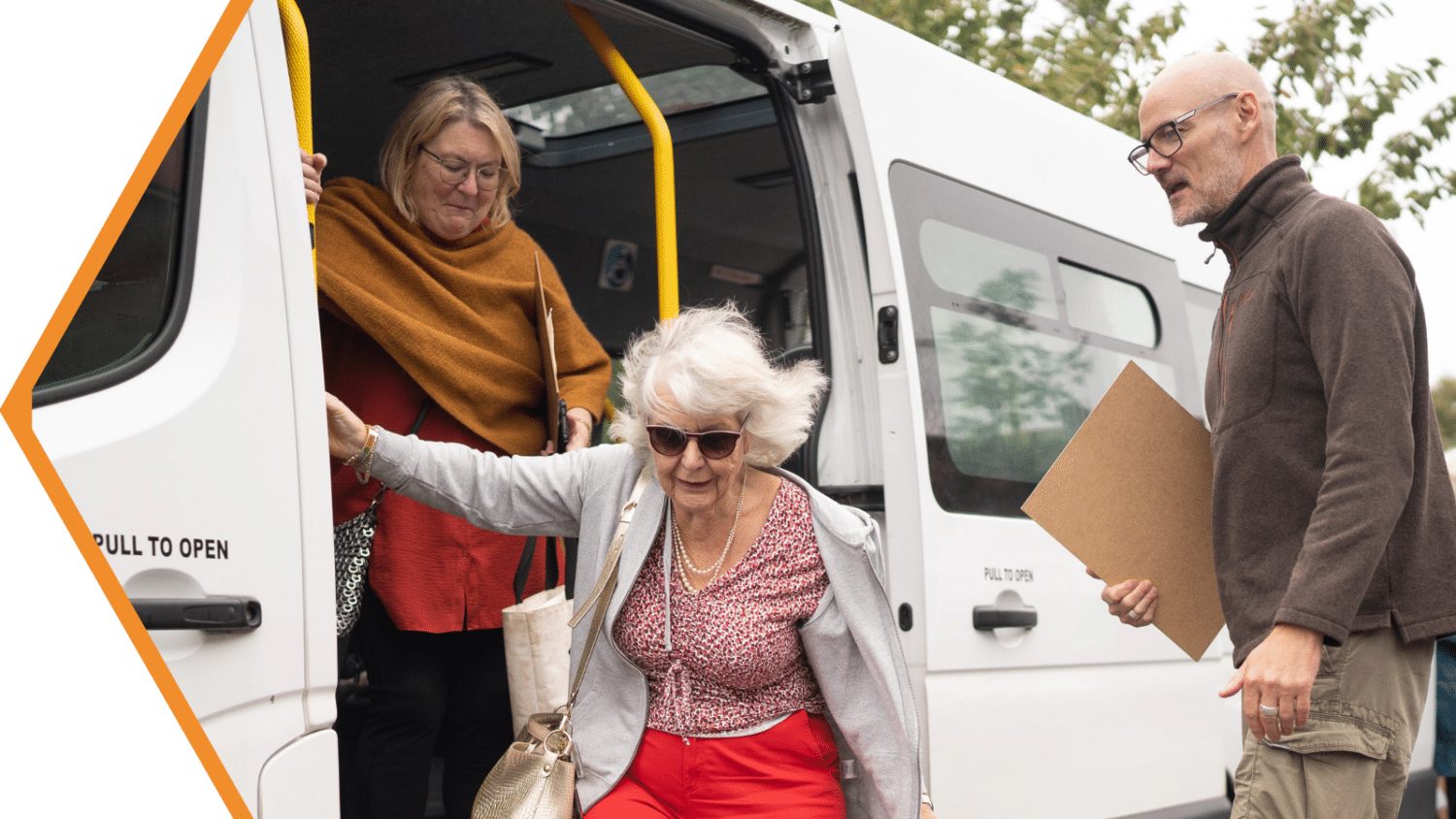
A report, commissioned by Humber and North Yorkshire VCSE Collaborative, has been published to support a greater understanding of community transport provision across Humber and North Yorkshire.

Humber and Wolds Rural Action, Hambleton Community Action and East Yorkshire Community Transport, who provide community transport services, produced the report which highlights what services are being delivered, the capacity and demand on these services, and the opportunities for future growth and connectivity.

A key pressure highlighted in the report refers to previous changes in the prioritisation of criteria for patient transport. This has resulted in a notable increase in demand for community transport by patients who struggle to attend medical appointments due to lack of transport. Any changes in criteria for transport has an impact on community transport organisations, who people turn to for support.

As of 1 April 2025, there will be further changes to the national NHS England criteria to achieve a consistent approach. Due to this piece of work to map community transport across Humber and North Yorkshire, organisations will work alongside health colleagues to fully understand the impact.

‘Whilst all community transport groups are doing their best to meet demand, in some cases demand outstrips resource and there is a danger that people are turned away’.

As well as raising awareness of the pressures faced by Community Transport providers, the report also highlights the wider benefits services can provide for individuals and communities, stating:

‘There are without doubt added health benefits associated with the use of community transport (CT) for passengers, providing opportunities to interact socially and reducing social isolation. These wider benefits are linked to health by preventing ill health, reducing social isolation, promoting independent living, and keeping people active, all contributing to keeping them out of hospital and better able to reduce their demands for health services.’

As part of the report findings, a series of recommendations have been published which focus on integrated models of working, funding and sustainability, appointment scheduling, improving data collection, planning, communications between sectors, and partnership working across Humber and North Yorkshire.

The report is being shared across our Health and Care system, with health and Local Authority leaders as well as with community transport organisations in our region, and it is intended to provide a platform to build from and enable collaboration across sectors.

View the report here.

If you have any questions about the report, please email the VCSE Collaborative team: hnyicb.vcseteam@nhs.net


Utility Aid is offering Community First Yorkshire members a free Desktop Audit on their latest energy bill!

Utility Aid is the UK’s leading energy broker for the charity and not-for-profit sector. As well as helping to secure new contracts with your Electric, Gas, and Water, Utility Aid can also help with supplier problems, inaccurate bills, advising on renewable energy options, and your journey to ‘Net Zero’.

If you need support navigating your invoices, feel you are being overcharged, or are unsure what it all means, Utility Aid is on hand today!

Contact partnerships@utility-aid.co.uk today to book your session, and be sure to submit a copy of your latest invoice.

Please introduce yourself.

Hello, my name is Catherine and I am a library supervisor at Harrogate Library. I have worked here for just under two years and my main role is to manage the staff and volunteers, as well as the building. I also plan events and activities, and work alongside our outreach team to create partnerships within the community.

What attracted you to the organisation and role?

I have always enjoyed working in the public sector and have previously worked in Leeds Libraries and at an older person’s charity called OWLS. One of the tasks that I particularly enjoyed was managing the charity’s volunteers and organising their befriending service, so when this role came along which involved working with volunteers and dealing with books, it seemed perfect!

What would you say to anyone thinking of becoming a Volunteer Coordinator/ Manager?

Working with volunteers is so incredibly rewarding and it allows you to meet such a wide variety of people. It is important to know why someone wants to be a volunteer and what their strengths are, so they can be fitted into the right role. It is also vital that volunteers are made to feel valued and they know they are just as important in the running of the organisation as the paid members of staff.

What have you learnt about yourself while in this role?

Every day is different in the library and working with the public means I never know what will be round the corner. I’ve learnt to stay calm and understand that patience and listening skills are key!

Finally, tell us something about yourself that your colleagues would be surprised to know.

I can play the saxophone and love playing around on a drum kit!

Volunteers managing England’s 10,000+ rural community halls are being provided with guidance to help them commission the right type of building survey.

The resource was instigated by ACTion with Communities in Cumbria who, when working with halls across rural Cumbria, found there was variable knowledge amongst funders, surveyors and village hall committees about what was needed and required in procuring and carrying out surveys of village halls and similar rural community buildings.

The guide has been authored by Ben Stagg, Director of stagg architects who wrote ACRE’s net zero design guide in 2024.

Explaining the benefits of obtaining a survey

The guidance takes a hall committee through the benefits of obtaining a survey, explains different types of surveys and how to go about engaging a surveyor. The section for surveyors will be useful for hall committees to share when commissioning their surveyor. There is also a comprehensive chapter on energy surveys.

Surveys are important because they help ensure your hall is kept in a good condition and that alteration and improvement work is appropriate and beneficial.  They don’t just describe the existing situation; they can also be used to identify improvement works and assess and evaluate recommendations.

An invaluable guide

Julie Minns, Member of Parliament for Carlisle and North Cumbria said: “This is an invaluable guide. Community buildings are an important focal point and resource for local people the length and breadth of the country. They are particularly important in rural areas where geographic and social isolation are great. The vibrant and varied activities in the community centres in North Cumbria, are proof of just how needed and valuable this guide from ACRE is.”

The National Lottery Community Fund were pleased to support this guidance through an initiative of the ‘Northumberland, Durham and Cumbria Community Places’  project that they fund.

The National Lottery Community Fund provide grants for hundreds of village halls every year.  Duncan Nicholson, Regional Head of Funding for the North East and Cumbria said: “Due to the generosity of National Lottery players we are able to support the innovative and vital work that projects like this deliver. Communities across Northumberland, Durham and Cumbria Community spaces will be able to continue to use much needed locally based accessible venues assured that buildings are fit for purpose and protected for future generations.”

Copies of the guidance can be downloaded here.

At the beginning of 2025, we worked with the York & North Yorkshire Growth Hub and Social Vision to offer free peer support, workshops, mentoring and networking for any budding social entrepreneur in North Yorkshire. The programme has ended but we are pleased to share some of the slides and resources here:

We are developing a new Community Business peer network so please sign up to our newsletter and look out for further information.

What is a Citizens’ Jury?

Being part of a Citizens’ Jury is your opportunity to share your thoughts, hear different opinions, and work together to make recommendations that really matter.

This Citizens’ Jury has been commissioned and funded by Yorkshire & Humber Secure Data Environment to recruit 25 members of the public to help shape the future of healthcare research.

How Does a Citizens’ Jury Work?

The Citizens’ Jury is designed to encourage open and meaningful conversations.

Over a few days, you will;

  • Learn about the Yorkshire and Humber Secure Data Environment (SDE) and why it matters. A secure data environment (SDE) is a platform that stores and provides access to data while keeping it secure and private. SDEs are often used to store health and social care data for research and analysis.
  • Share your views and work with the group to provide answers to key questions.
  • Hear from a range of experts, including clinicians, researchers, policy specialists, and people with different opinions.

Why Should You Join?

As a Citizens’ Juror, you will:

  • Represent your community and make sure all voices are heard.
  • Help shape how the NHS uses data to improve healthcare and research.
  • Get training and learn new skills.
  • Be paid for your time.

Who Can Join?

Yorkshire and Humber Secure Data Environment are looking for people from all backgrounds across Yorkshire and Humber. They will choose participants through a random selection process to make sure the jury reflects the region’s diversity.

You do not need to be an expert – they want everyday people with everyday perspectives.

Ready to Get Involved?

This is your chance to make a real difference to NHS services and healthcare research.

Apply now to the Citizens’ Jury, closing date Sunday 23 February: https://re-url.uk/WP3K